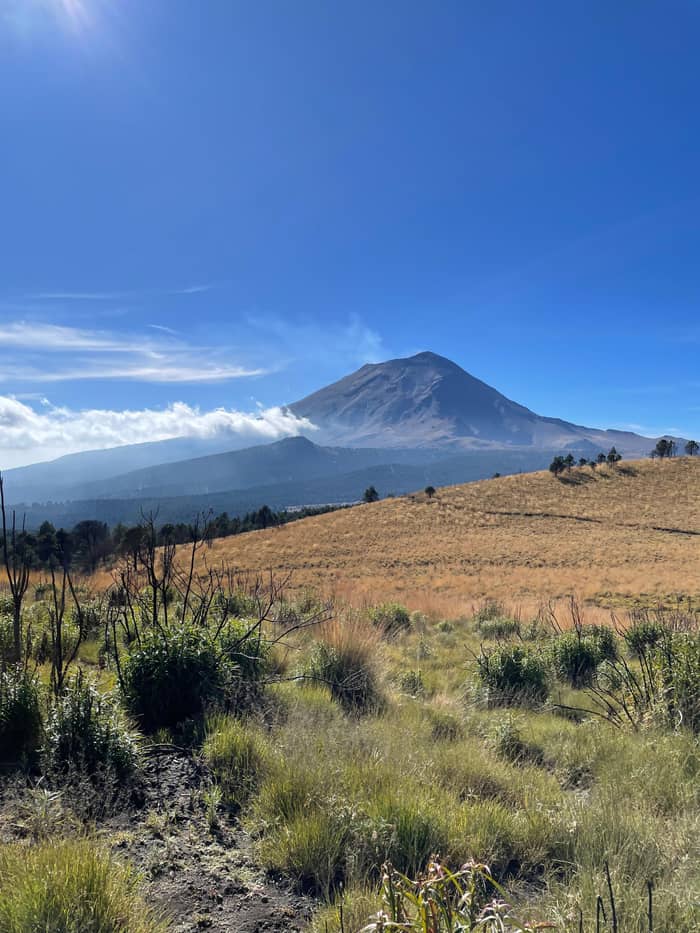
Site tour
The day hike
From Mexico City by van
- StopPaso de Cortes briefing
- WalkGuided, 3 hours
- Pricefrom $168
Guides
Language
Currency
See open slotsstarting at $168 · free cancellationChecklist you can tick
Brief answer
The legend of Popocatepetl y Iztaccihuatl tells of a warrior and a princess whom the gods turn into volcanoes, an active warrior and a sleeping princess.
The legend in brief
Checklist · 9 tasks
Mark each item when done. Progress is stored on this device.
0 / 9 ready
All done. Only your date and your pickup point in Mexico City are left to choose.
Book your seatThe tale as Mexican institutions tell it, the second telling with the rival and the torch, why there is no single version and what the mountains themselves add.
Editorial team, iztaccihuatl.top · Updated November 24, 2026 · Reading: 8 min
Quick look
The story of Popocatepetl and Iztaccihuatl is a legend of central Mexico, and the National Institute of Anthropology and History gives a clear short version. In its telling Iztaccihuatl is a princess whose heart belongs to Popocatepetl, a warrior in her father's pay.1 The father then sent the warrior off to fight, with his daughter's hand as the prize for beating the enemies.2 The promise is the hinge of the tale.
The next turn is the tragedy. According to INAH, the warrior returned from the battle and learned that the princess had died.8 He carried her lifeless body to the mountains and begged the gods for mercy.8 The institute's text then gives the ending: the gods, seeing his suffering, made her an inactive volcano and gave him an active volcano to keep watch over her down the ages.3 That compact ending explains why a mountain sleeps while its neighbour still smokes.
A second INAH text speaks of a legend of tragedy and eternity.9 INAH adds that the name Iztaccihuatl means white woman in Nahuatl, a nod to the silver mantle of snow on its summits.10,11 Read together, they show the legend as a way of looking at the mountain more than as a plot to be memorised. This story of Popocatepetl and Iztaccihuatl is told as an explanation of what people see, and it works as a bridge between a landscape and the feelings it provokes.
Retellings compared
| Detail | INAH | Education ministry |
|---|---|---|
| The lovers | A princess and her father's warrior.1 | A princess and a warrior in the Aztec Empire.13 |
| The trigger | War takes the warrior away.2 | A rival lies about his death.4 |
| The cause of death | She dies before he returns.8 | A rival lies and she dies of sadness.4 |
| The vigil | He begs the gods for mercy.8 | He lights a torch and keeps watch.12 |
| The ending | The gods make her inactive and him active.3 | The torch explains the fumaroles.14 |
INAH tells the shorter story and the Nueva Escuela Mexicana lesson adds the rival and the torch, so neither is the original.3,5
The Mexican education ministry publishes a longer version in its Nueva Escuela Mexicana lessons. It places the tale in the Aztec Empire, with Iztaccihuatl as a beautiful princess in love with Popocatepetl, a brave and handsome warrior.13 This Aztec legend of Popocatepetl and Iztaccihuatl adds a new character: a rival in love who slyly tells the princess that the warrior has died in combat.4 She dies of sadness, not knowing that the report was a lie.4
The ending also gains detail. In the ministry's version Popocatepetl returns, learns that his beloved has died, takes her in his arms and carries her to the top of a mountain, where he lays her down, kisses her for the last time, and lights a torch to kneel before her and keep watch over her eternal sleep.12 The picture of the kneeling warrior with the torch turns the tale into a portrait of grief that does not end.
The torch explains a visible fact. The ministry says that in this version, when Popocatepetl remembers Iztaccihuatl his heart trembles and his torch lights, which causes the fumaroles the volcano emits.14 That is how the legend stays current: each plume over the active volcano is read as the warrior's memory. A legend that explains the weather of a real mountain is easy to keep alive, and the ministry says the story stays current and is worth telling again and again.
A reader comparing the texts will notice differences, and the ministry explains why. It says that an important part of legends is that they have no definitive version, so a written telling does not make itself the original.5 It adds that oral telling was the first means by which the original civilisations passed on information.24 The legend of the volcanoes belongs to that tradition, and each retelling chooses the details it wants: a father who sets a condition, a rival who lies, a torch that never goes out.
The ministry also says this is among the most characteristic legends of the country, especially of the central zone, involving Mexico City, Tlaxcala, the State of Mexico and Puebla.25 That geography matches the mountains themselves, which stand on the border of the states of Mexico and Puebla.26 A story told on several sides of a mountain range is bound to vary, and the variations are part of its history, not errors to be corrected by a single authoritative text.
Some choices are worth noticing. INAH names no rival, and does not say who the enemy was or which people the father ruled.2 The ministry places the tale in the Aztec Empire,13 and INAH gives no setting at all. The honest summary is that the core is stable, a princess, a warrior, a promise, a death and a transformation, while the surrounding scenery changes with the teller. When you hear a guide or a relative tell it, enjoy the variation and listen for which details they add.
Your way in
Tap what you want and see where to go.
If I want the short version
INAH's retelling
INAH tells it in a few sentences: the princess, the promise, the death and both volcanoes.1,3
If I want the full drama
The ministry's version
It adds a lying rival, a torch and the fumaroles that the torch explains.4,14
If I want the oldest sources
The Nahuatl dictionary
A 1579 text, quoted by UNAM, already calls the Sierra Nevada the white woman.18
If I want to see her from the city
A clear day after a cold front
INAH describes the snow-covered peaks over the capital after a drop in temperature.19
If I want to stand on her
The sleeping woman
Popocatepetl is closed to climbing, and Iztaccihuatl is the mountain the park describes for climbers.20,21
If I want the sacred side
The summit's ritual history
INAH reports ritual vessels and a pilgrimage tradition on the summit.22,23
Go and see the mountain
Site tour
From Mexico City by van
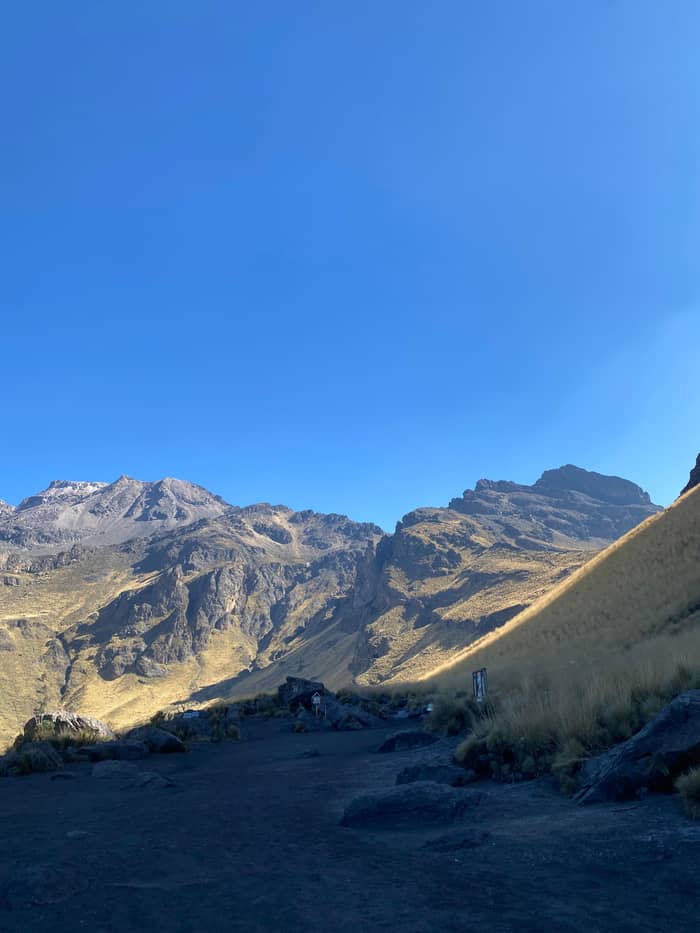
Guided day
A guided day to the hut
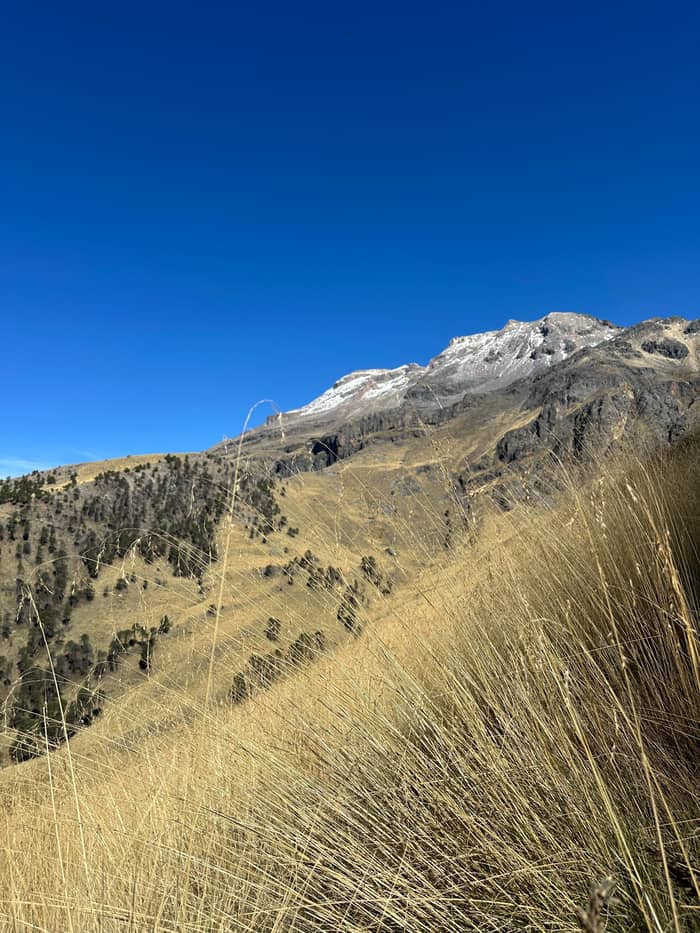
All-inclusive
Hiking with pickup
The legend is a story about a pair of mountains, and the older sources are about the name of the mountain. UNAM's Nahuatl dictionary cites a source from 1579, Duran, who calls the Sierra Nevada by the name Iztac cihuatl, meaning white woman.18 In another passage Duran describes Iztac cihuatl as a goddess, whose name he again glosses as the white woman.34 So a source from 1579 already treats the white woman as a goddess tied to the Sierra Nevada.34
Alarcon, in 1629, adds figurative senses, salt and copal.35 Wimmer, in 2004, records the name for a peak lying north of Popocatepetl.36 These are dictionary entries, not retellings, and they should be read as evidence about the name, which is a smaller claim than evidence about the story. These entries do not tell the love story, and they should not be presented as if they did. What they show is how long the name, and the image of a white female mountain, has been on record.
The USGS atlas traces the name back to the Nahuatl iztac (white) and cihuatl (woman), and cautions that translations vary.37,38 If you meet an odd translation, check it against these sources. Our page on the name and the sleeping woman goes further into the words and the profile, while this page stays with the story, so use both pages together if the name is what brought you here. A dictionary entry is the safest anchor for any claim about what a Nahuatl word means.
The story in order
The love
The princess loves a warrior who serves her father.1
The promise
The father promises his daughter if the warrior defeats the enemies.2
The lie
In the ministry version a rival says the warrior is dead.4
The loss
The princess dies, whether before his return or of sadness.8,4
The vigil
He carries her to the mountains and keeps watch with a torch.8,12
The change
The gods turn her into a quiet volcano and him into an active volcano.3
The legend gives a mountain a sleep and its neighbour a fire, and the real volcanoes agree. CENAPRED reports constant eruptive activity at Popocatepetl since 1994 and says authorities have drawn a 12 km restriction circle around the crater.6,31 INAH describes Iztaccihuatl as an inactive volcano,26 and the USGS atlas prefers dormant to extinct.7 The tale and the science agree in outline, even if the volcanoes do not read the legend.
The mountain's own past is also a story of belief. INAH says that archaeological work on the summit found ritual materials such as vessels representing Tlaloc and incense burners, and that pilgrims regularly climbed to the summit during the last 2 centuries before the Spanish arrived.22,23 Another INAH text says that in pre-Hispanic times the summit was a sacred place that symbolised the link between the earthly and the heavenly plane and was tied to water and fertility.39 The legend sits on top of a much older reverence.
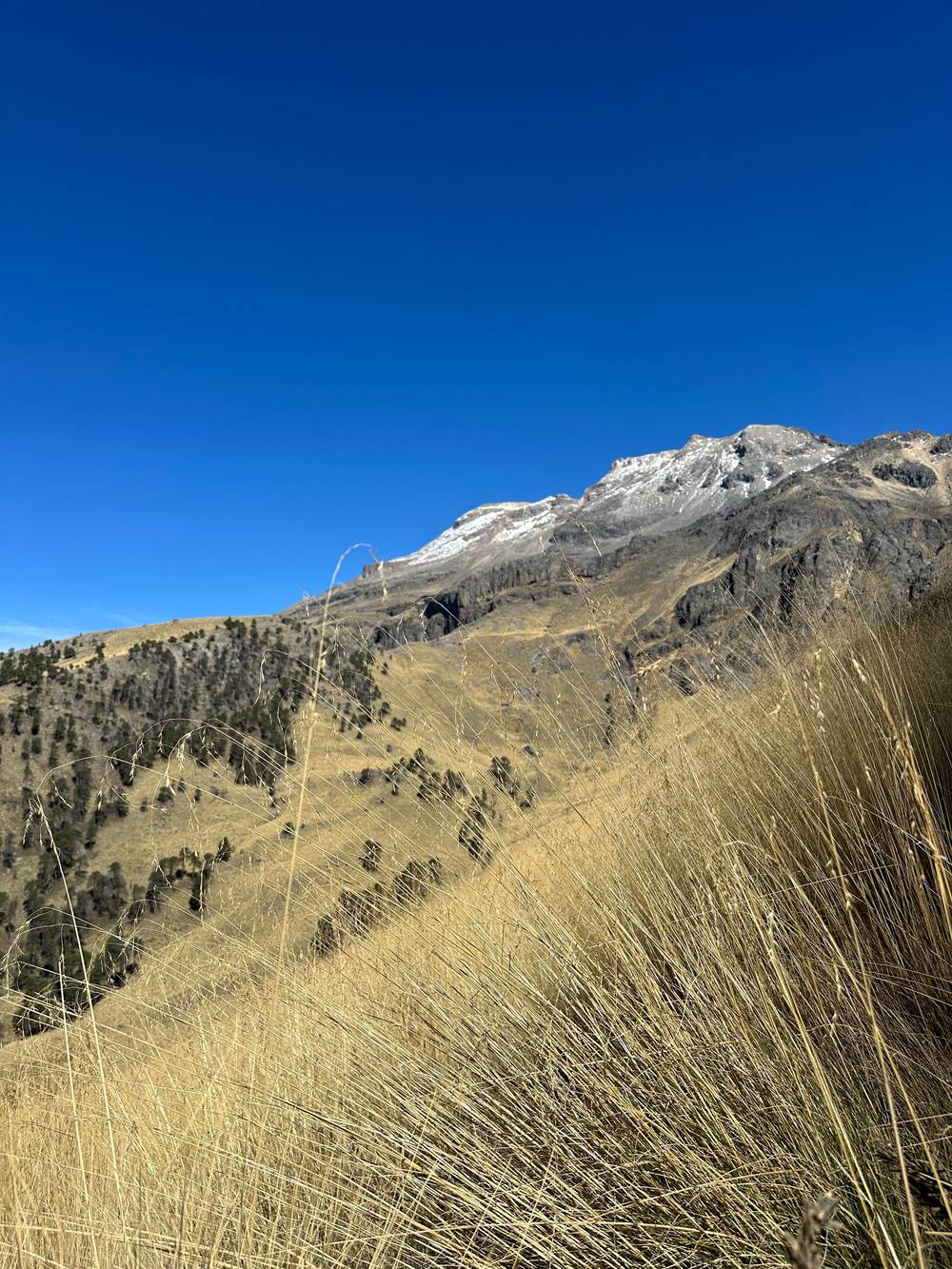
Part of the picture has changed. The ministry of culture's note says the ice that crowned Iztaccihuatl died out around 2018, and calls perennial tropical ice vulnerable to climate change.40,41 The white mantle that the legend and the name describe is therefore thinner than the older descriptions imply, although snow can still lie on the summits after a cold front.19 The Secretaria also says the ice disappeared completely at the start of this decade.42 For a legend about a white woman, that is a striking change, and it makes the snow of a cold morning, rather than the glacier, the white shroud that people now see.
Video
Mexico Unexplained on YouTube · The clip loads only after you tap play.
The gods, seeing his suffering, decided to turn Iztaccihuatl into an inactive volcano, while Popocatepetl became an active volcano that would keep watch over his beloved through the centuries.
The best way to meet the story is to look at the mountain. The USGS atlas says the western skyline reads as a woman asleep, from the head at the north end to the feet at the south end,27 and that Mexico City lies only 64 km away.28 INAH shows the view from the capital after the temperature fell, with the white peaks wearing a mantle of snow.19 That suggests a clear morning after a cold front as the time to look for the sleeping woman from the city.
Closer to the mountain the park offers viewpoints. The park's El Caracol trail circles a hill opposite Paso de Cortes for views of both volcanoes,29 and the picnic area at Paso de Cortes has benches from which Popocatepetl is admired.30 The site tour's day hike begins with a safety briefing and a photo stop at Paso de Cortes. Those stops are easy places to stand with a child or a visiting friend and tell the story with the real mountains in view, which is how most legends were meant to be heard.
Respect the volcano as well as the story. Popocatepetl is closed to climbers, and the park says any ascent has been prohibited since 1994.20 The mountain you can climb is the sleeping woman, with a guide and the right equipment if it is your first time.43 Bring the legend with you as a reason to go slowly and quietly, and leave the planning to the guide pages. The tale is better told at the viewpoint than recited on the summit, where breath is short and the wind is strong, and where the group's attention belongs on the footing and on the guide.
FAQ
In that version he tells the princess that the warrior died in combat, and she dies of sadness.4
In the ministry version, when he remembers her his heart trembles and his torch lights, causing the fumaroles.14
The ministry says that a written legend is not the original, because no original version exists.5
Sources
Planning a day on Iztaccihuatl? Ask a real person here.